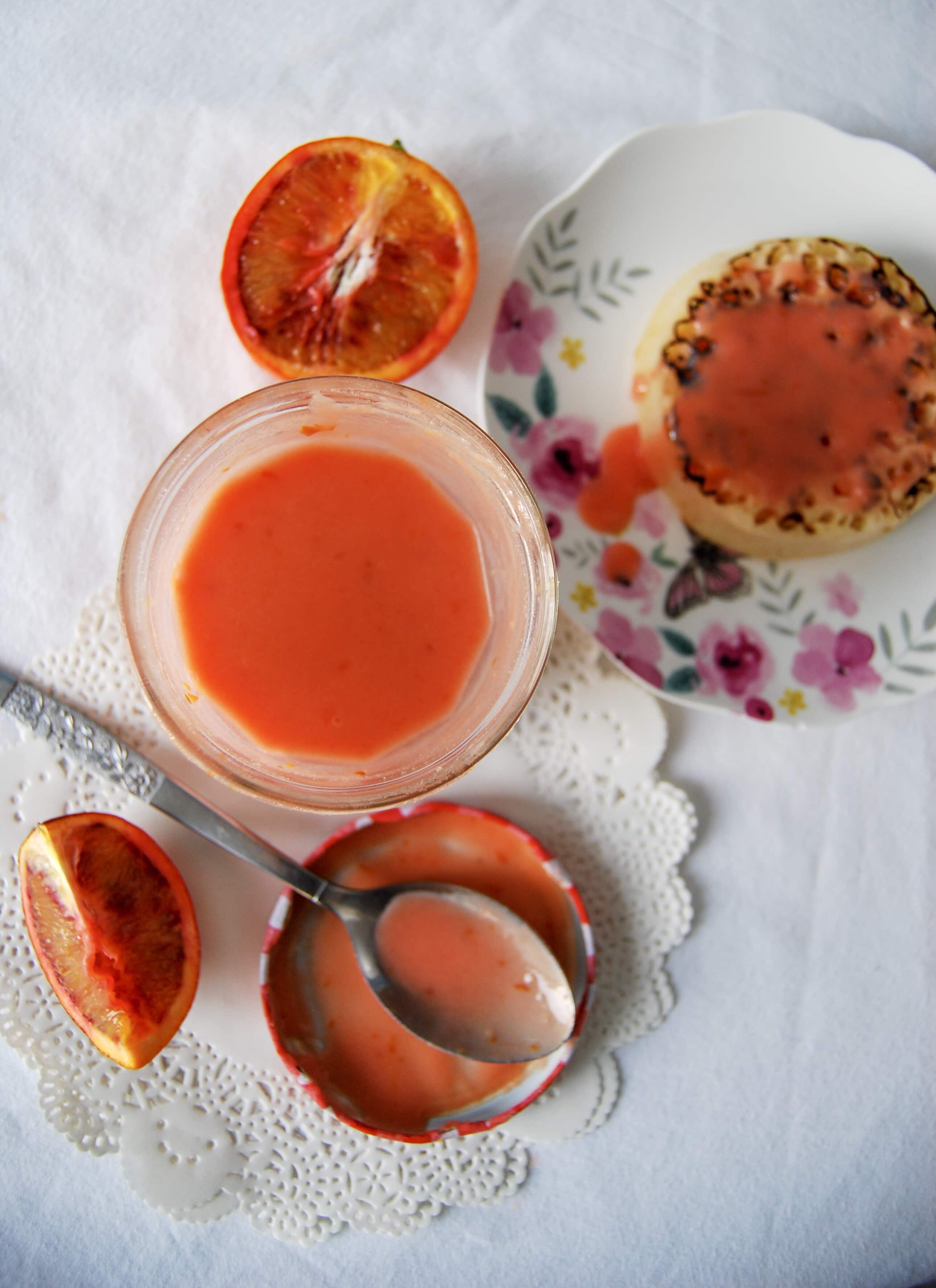
An easy, no fuss recipe for homemade Blood Orange Curd. This beautiful, vibrant curd makes a lovely Winter treat. Try it spread over hot crumpets or toast, or use it as a filling for a Victoria Sponge cake.
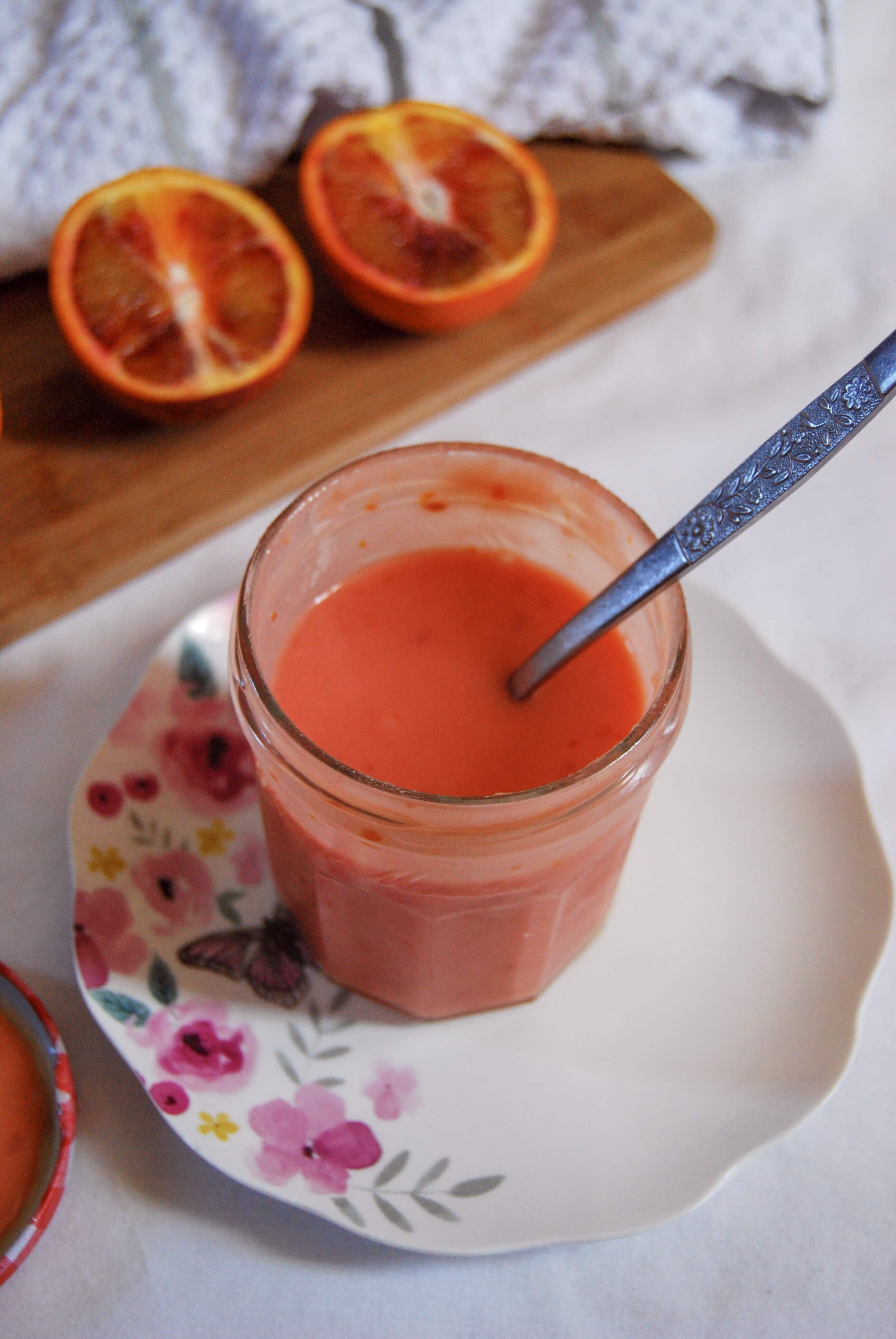
My favourite Winter fruit has to be blood oranges. Their beautiful ruby colour draws me in, but I also love the taste – they have a slightly sour edge that is not dissimilar to pink grapefruit.
They are especially lovely in fruit salads. Or simply on their own with some Greek yoghurt and a drizzling of honey.
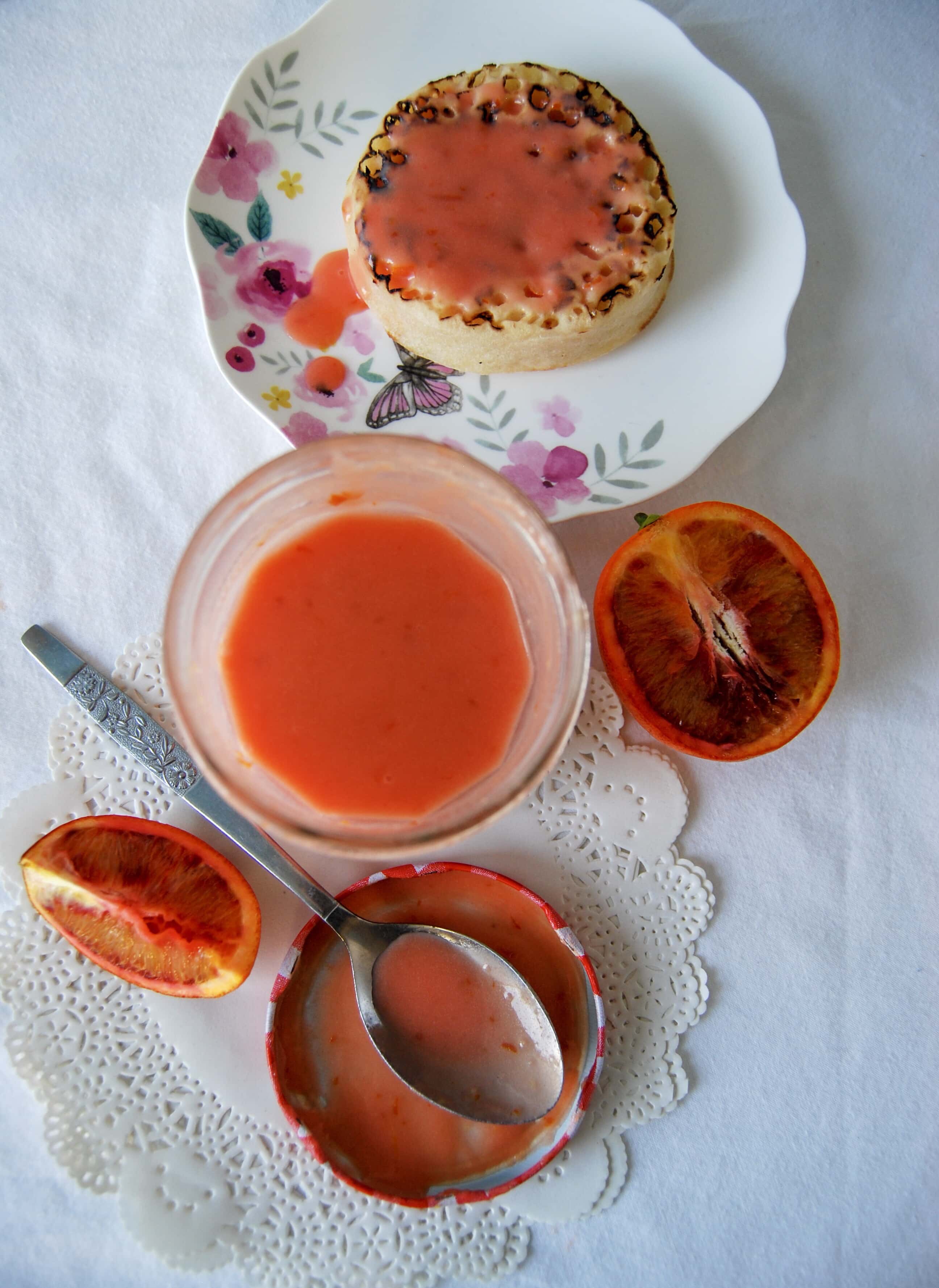
The vibrancy of your curd will very much depend on the colour of your blood oranges, so please don’t be sad if your curd turns out paler than you anticipated. It will still taste delicious.
If you manage to get your hands on some really gorgeous, crimson blood oranges then please…do yourself a favour and make some curd! You’ll be very thankful once you’ve spread some on your morning toast/pancake/crumpet/scone.
ingredients for blood orange curd
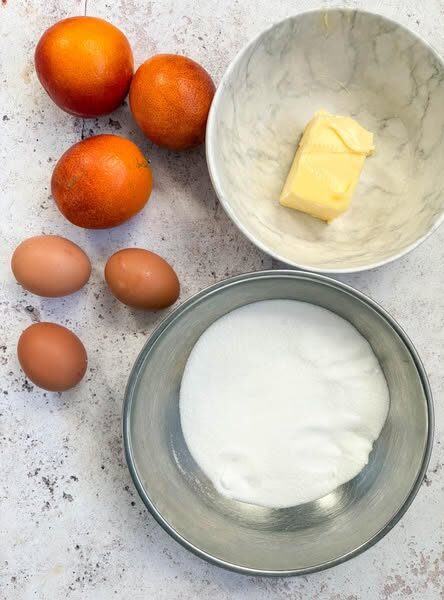
This recipe is super easy, I promise. It only requires four ingredients –
- The grated zest and juice of 4 blood oranges. Ideally, it’s best to use unwaxed organic oranges.
- caster sugar (I don’t recommend using granulated sugar for curd – the coarser grains may make the curd slightly gritty).
- 3 large (not extra large) beaten eggs, at room temperature
- unsalted butter
Blood orange curd isn’t as sharp as lemon curd. It has a more delicate flavour. If you prefer a shaper curd, swap one of the blood oranges for a lemon.
Some recipes will tell you to use a bowl set over a pan of simmering water to make fruit curd. I don’t bother with this. As long as you don’t allow the mixture to become too hot, you’ll be fine.
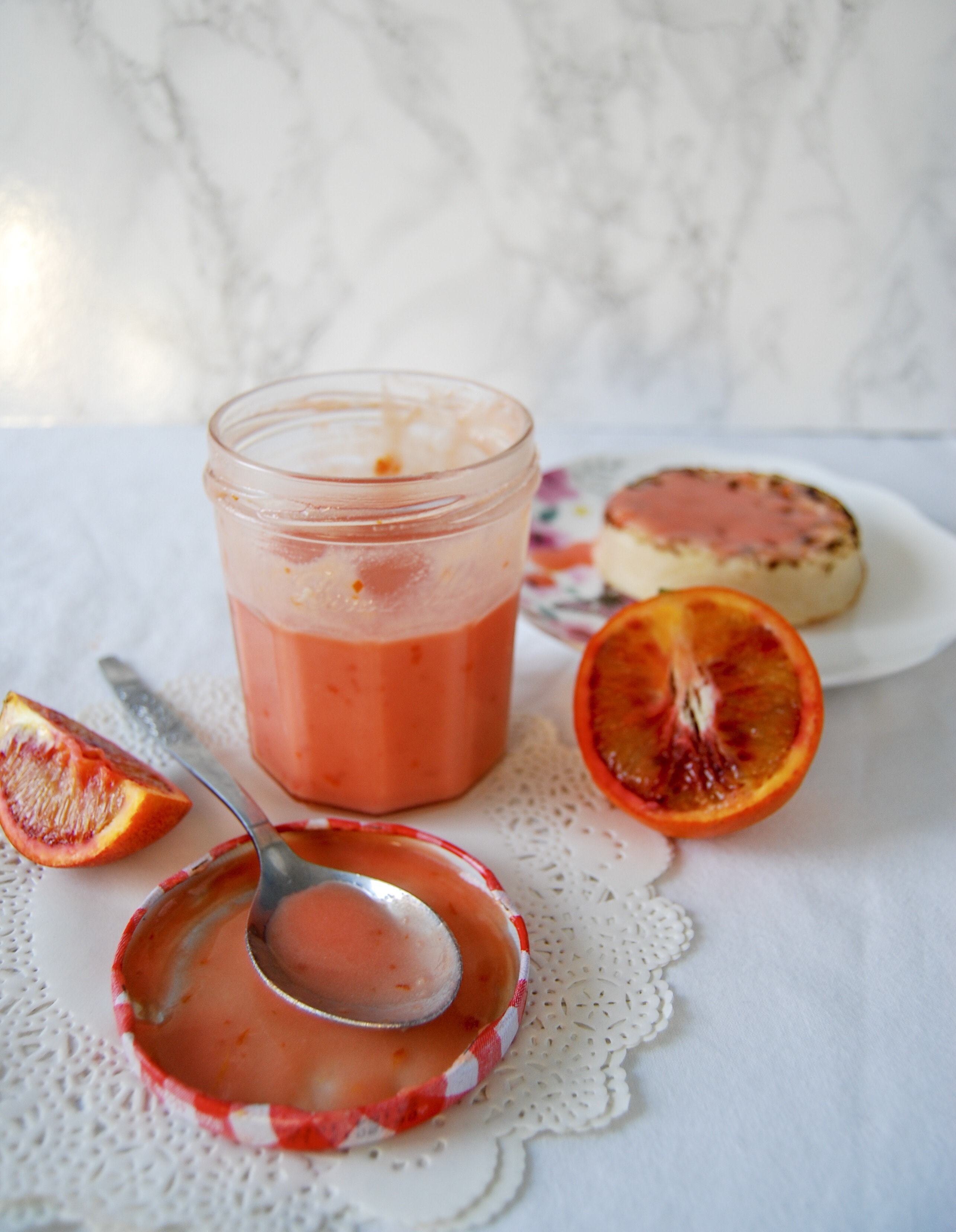
how to make it
Please scroll to the end of the post for a printable recipe card with ingredient amounts and detailed instructions.
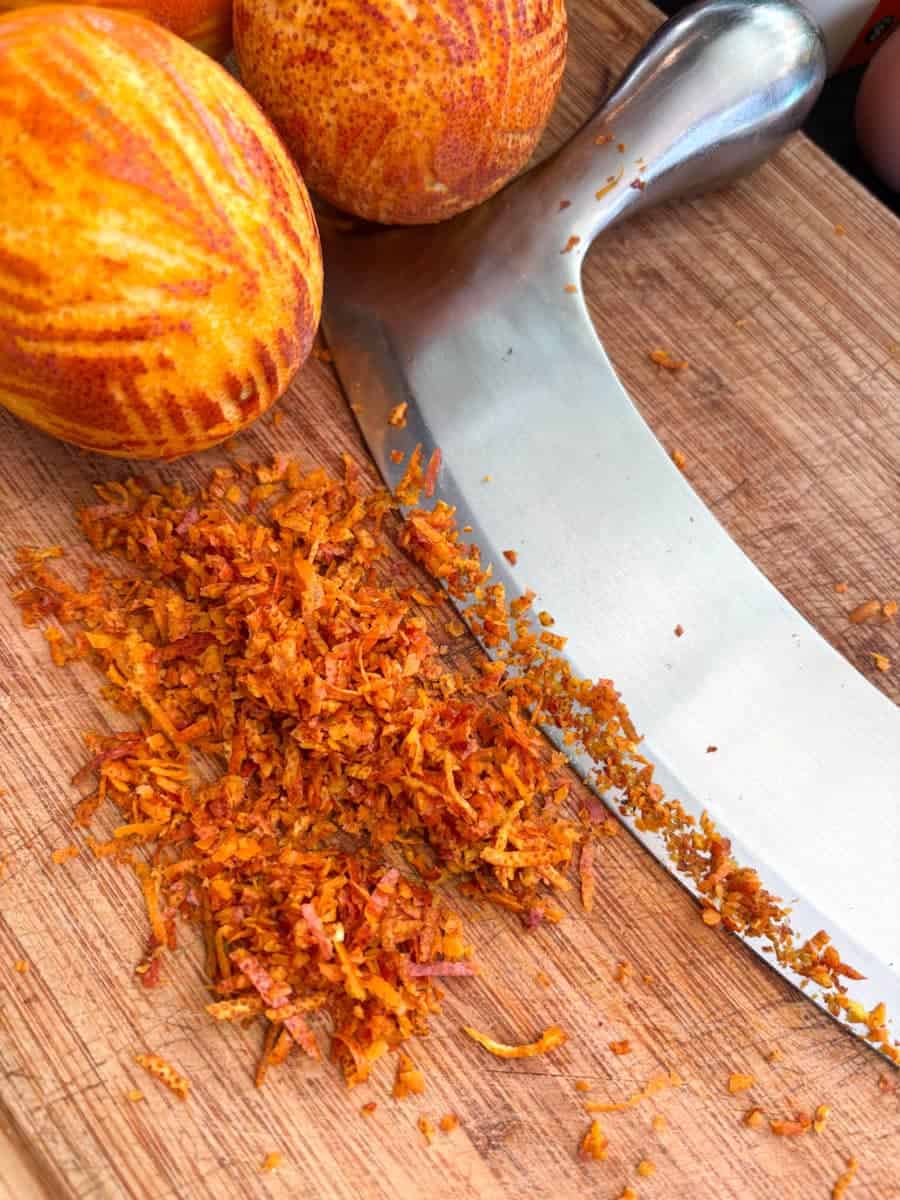
Step 1. Zest the oranges. I use a citrus zester very similar to this one. Using a large knife or Mezzaluna chopper, finely chop the zest. Cut the oranges open and squeeze the juice into a measuring jug. You’ll need 200ml of juice.
TIP – Depending on the size of the oranges, you might need 4 oranges to extract the right amount of juice. If you only have 3 blood oranges, you could use regular oranges or the juice of a lemon or lime to make up the amount. Basically, any citrus will do!
Step 2. Place the orange juice and zest, sugar and butter in a large saucepan. Place over a low-medium heat to melt the sugar and butter, stirring often with a wooden spoon.
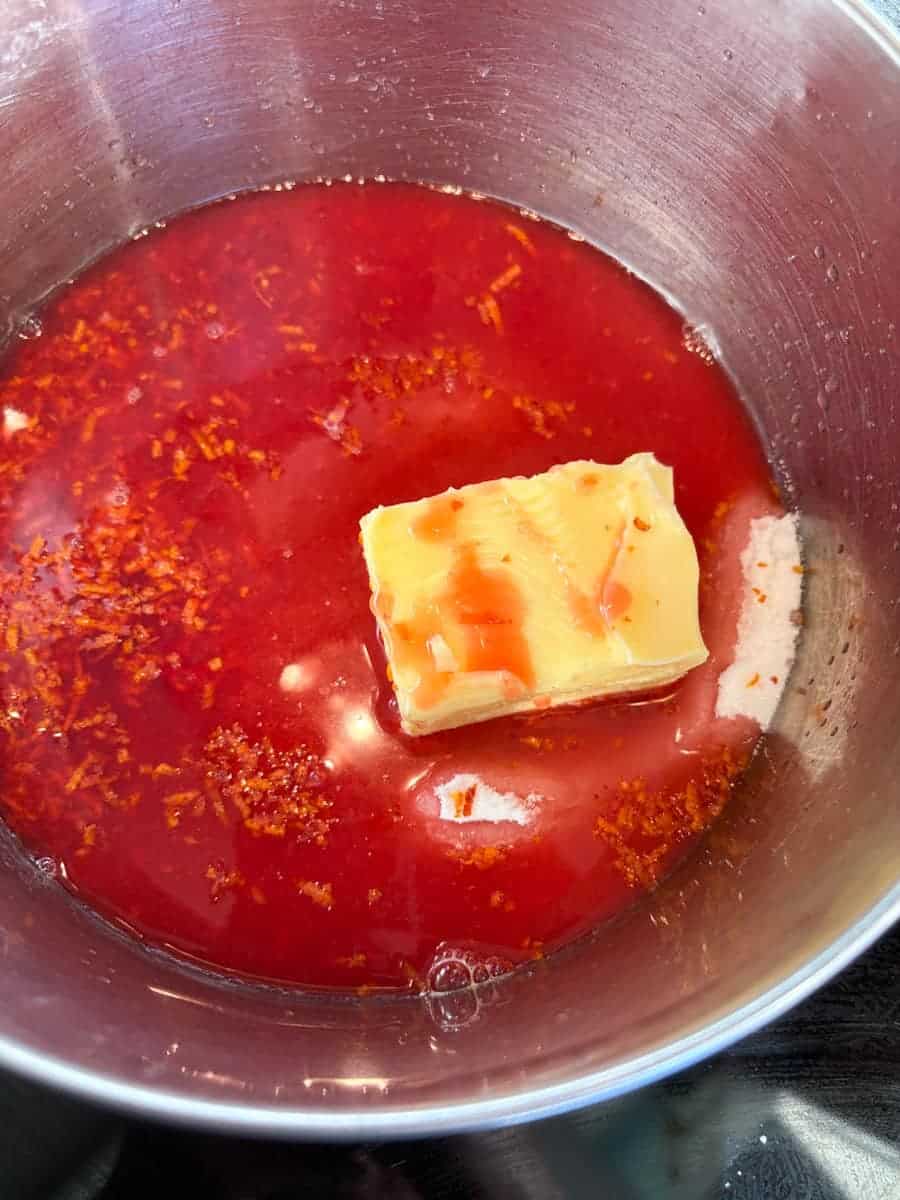
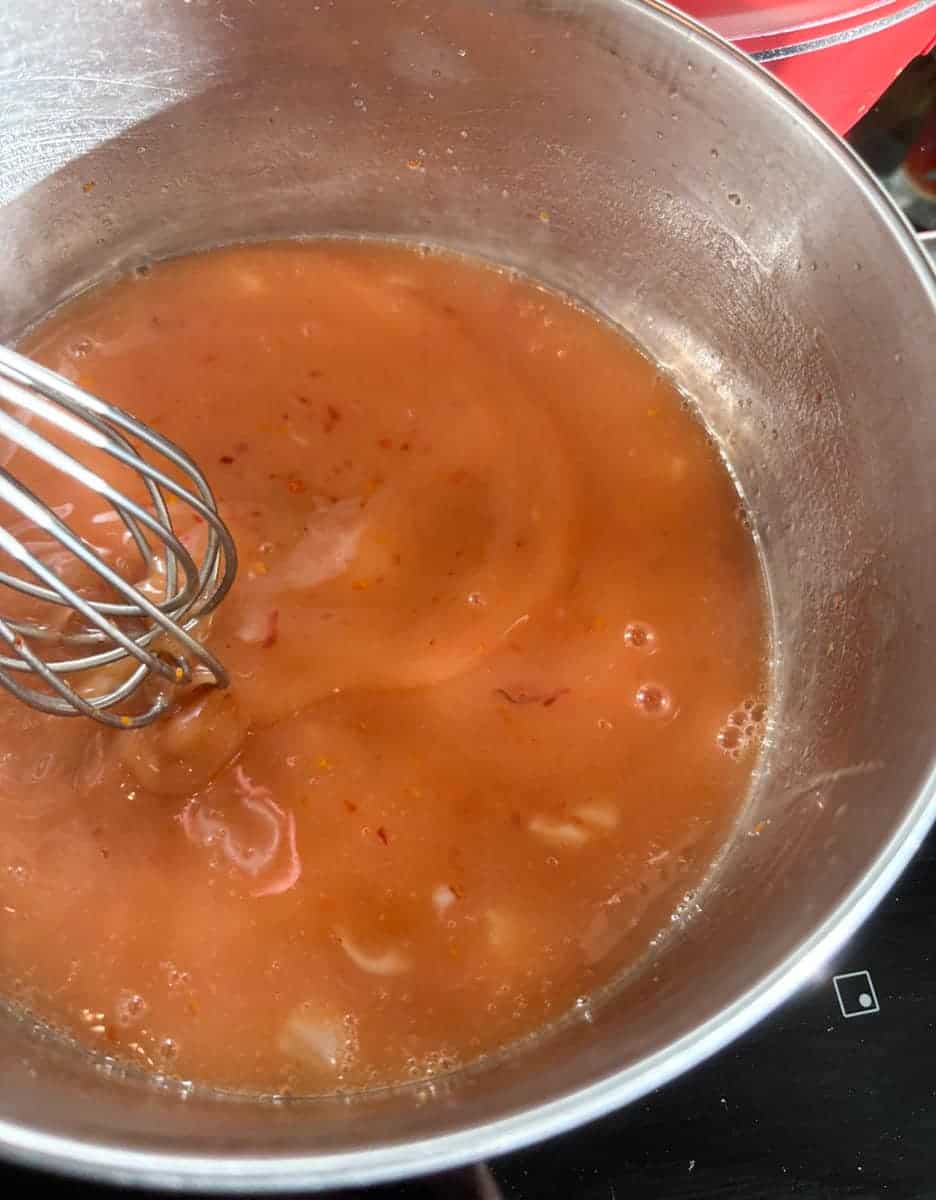
Step 3 – Once the sugar has completely dissolved and the butter has melted, remove the pan from the heat and slowly whisk in the beaten eggs, pouring in a little, whisking well, then repeating until all of the egg has been added.
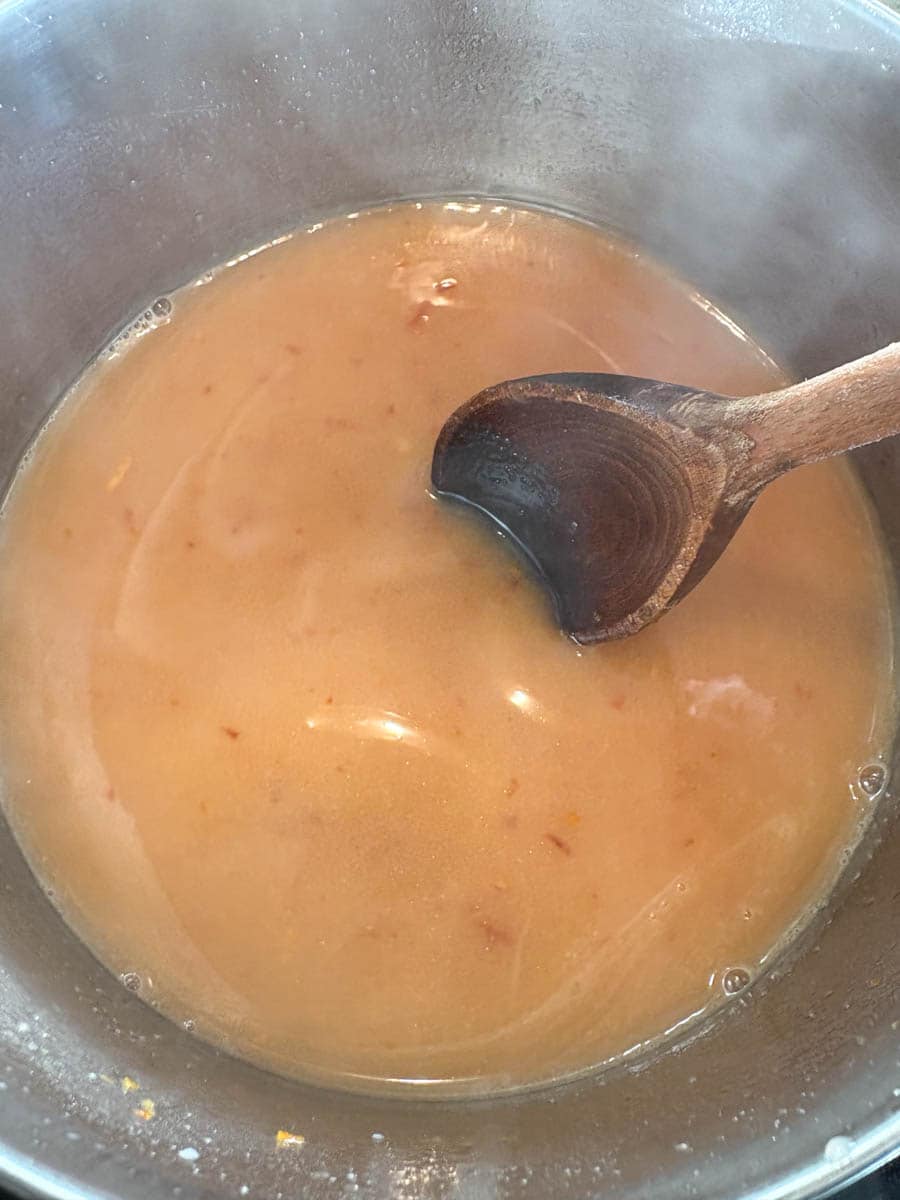
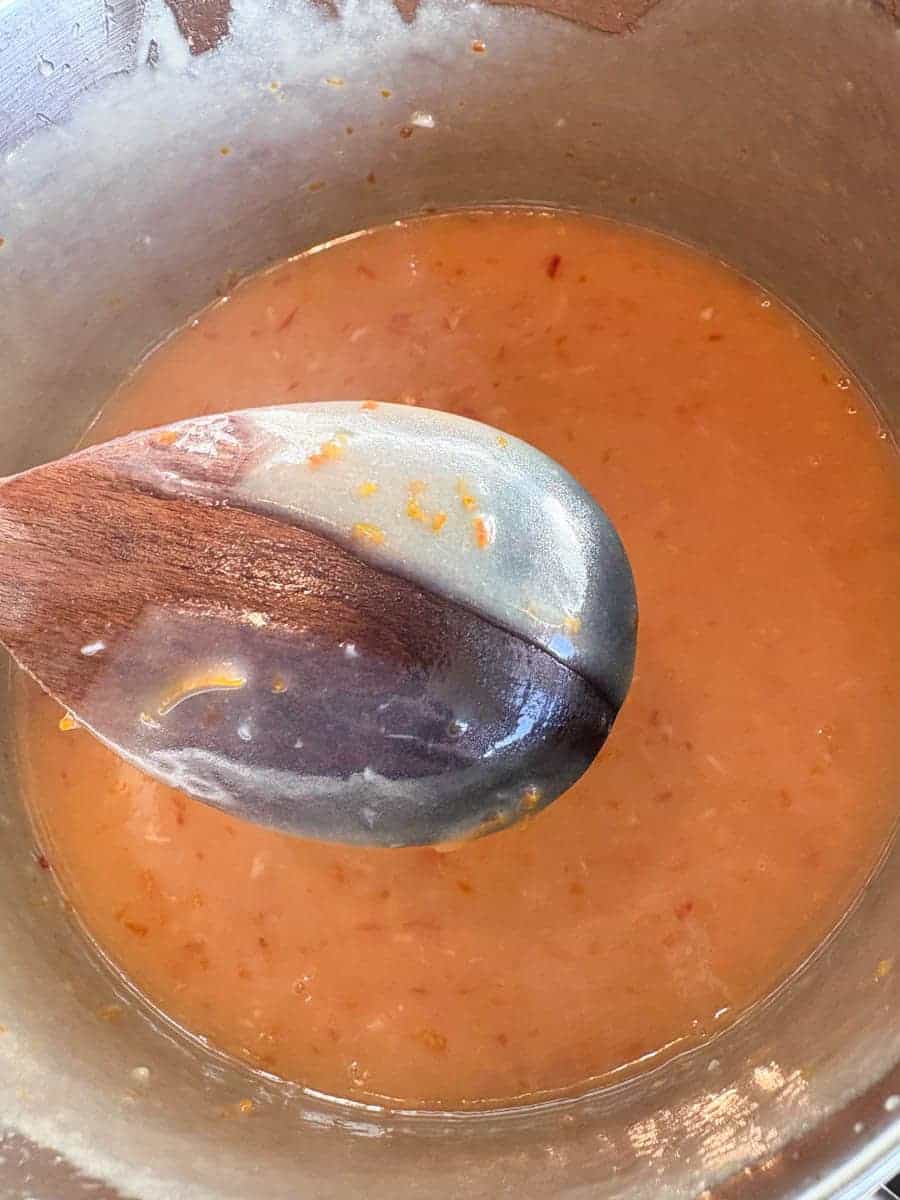
Step 4 – Place the pan back on the heat. Cook, stirring constantly, until the mixture starts to bubble and has thickened. When you can draw a line on the spoon through the curd, it’s ready.
what can go wrong when making fruit curd?
If your fruit curd has little white lumps, then it has overcooked. It’s very easy to do and has happened to me several times. I simply pick them out (as long as there isn’t too many!) or you could strain the curd through a fine sieve. The one drawback of sieving is you’ll end up losing a good amount of the citrus zest, so I try and avoid this scenario.
TIP – Please don’t stop stirring the curd once you’ve added the eggs! If I think the mixture is becoming too hot or I spy tiny white bits, I remove the pan from the hob, whisk like my life depends on it and if necessary, adjust the heat.
Fruit curd will thicken up further and set as it cools, so if you’ve never made it before, it can be a little bit tricky to tell if it’s ready. I always go by the wooden spoon trick – if you can draw a line through the curd on the spoon and it stays put, it’s done.
How many jars of curd will this recipe make?
This recipe will give you two medium (385ml) jars of curd. I don’t recommend making bigger batches of curd simply because it doesn’t have the same keeping quality as other preserves, like jam for instance.
How long will blood orange curd keep for?
Once opened, fruit curd will keep for up to one week in the fridge. If there are any traces of mould, it must be discarded straightaway.
Do I need to sterilise the jars when making fruit curd?
100% yes!
To sterilize the jars, all I do is wash them (and the lids) in very hot soapy water. Give them a good scrub, rinse them, shake off the excess water and place them in a very low oven (110C) to dry. Alternatively, you can put them in the dishwasher, then dry them off in a low oven (110C).
Make sure you place the hot curd in the sterilised jars and seal immediately.
Looking for more recipes to use blood oranges?
Blood Orange Curd
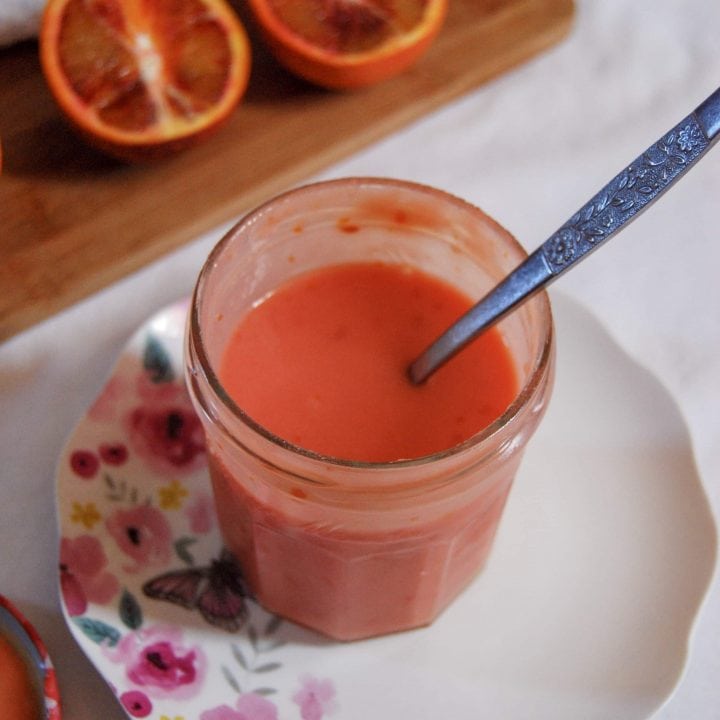
Spreading this vibrant, tangy blood orange curd on fresh bread, crumpets or whatever you feel like will lift your spirits on a cold, grey Winters morning.
Ingredients
- The zest and juice of four blood oranges, preferably unwaxed
- 200g caster sugar
- 3 large room temperature eggs, beaten
- 115 g unsalted butter, cubed
Instructions
- Zest the oranges and squeeze the juice from them. You should (hopefully) get around 200ml of juice from the oranges.
- Using a large, sharp knife or herb chopper, finely chop the zest in small pieces.
- Place the orange zest and juice, sugar and butter in a heavy based saucepan. Melt over a low heat until all the butter has melted and everything is smooth.
- Remove the pan from the heat and very slowly add the beaten egg, a little at a time, stirring the whole time. Make sure the heat isn't too high - the last thing you want is orange flavoured scrambled eggs!
- Once all the egg has been added, continue to stir over a low-medium heat until the curd thickens. How long it takes depends on the heat of your hob - mine took about 8 minutes.
- You'll know it's ready when the mixture easily coats the back of a spoon without running down.
- At this stage, take the curd off the heat immediately, pour into your hot sterilized jars and seal. The curd will thicken a little more as it cools.
Notes
Blood Orange curd can be stored at room temperature. Once opened, it must be placed in the fridge and used within one week.
For a sharper curd, swap one of the blood oranges for a lemon.
Nutrition Information:
Yield:
25Serving Size:
1Amount Per Serving: Calories: 86Total Fat: 4gSaturated Fat: 3gTrans Fat: 0gUnsaturated Fat: 2gCholesterol: 32mgSodium: 15mgCarbohydrates: 11gFiber: 0gSugar: 11gProtein: 1g
Calories and Nutritional information are calculated by a third party application and should be used as a rough guide only.
Hmmm… I recently made orange curd and it was good but very mild in orange-y-ness. My amounts were similar to yours but I didn’t use the rind. I make lemon curd all the time and love it really zesty… I think I’ll stick with lemon! Glad yours turned out well.
Hi Laura, I love really zesty lemon curd too – the recipe I use has six lemons! Have you ever tried passionfruit curd? It’s delicious!
I’m really not a fan of passionfruit. One of the few foods I avoid!
Looks delicious and I have to agree, passionfruit curd is really something else. So yummy!
That is just dying to be smothered over a good sponge! yum. I loved your bakewell inspired couronne from a while back! I gave it ago and used your filling recipe…it was yum so thank you.
John’s not the biggest fan either!
Thank you, I’m so pleased you enjoyed it! 🙂
Yikes, that looks good! First time I ever made lemon curd I was really surprised how easy it was, must give this one a go too.
Thanks so much for sharing with Tea Time Treats!
Janie x
[…] Blood Orange Curd by Cookie’s, Cakes and Bakes. Brilliant use of eggs in this seriously seasonal Blood Orange Curd, and I bet it tastes fantastic […]
Wow that looks great! Maybe you could use these curds to make a blood orange meringue pie!! :)))
That would be fabulous!
This looks so good! What a great combination of flavors!