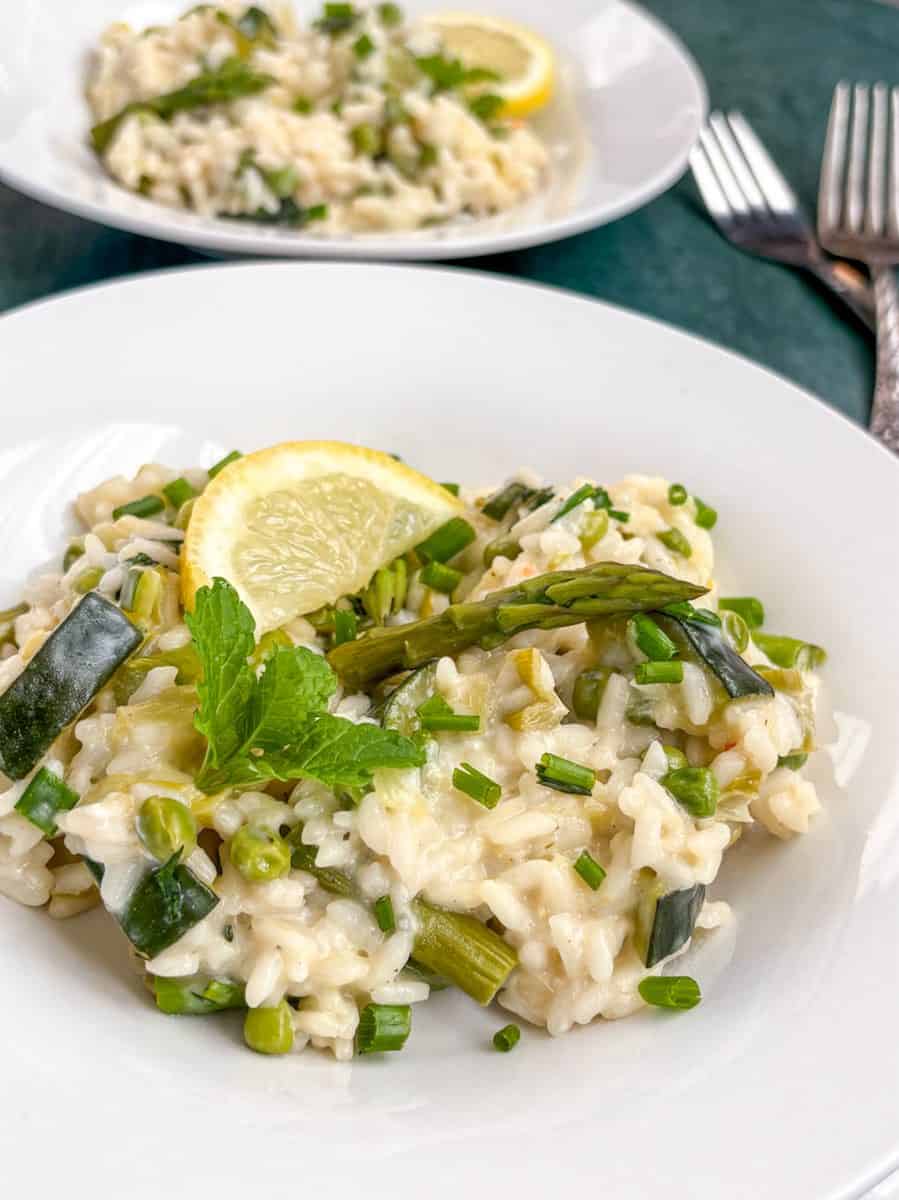
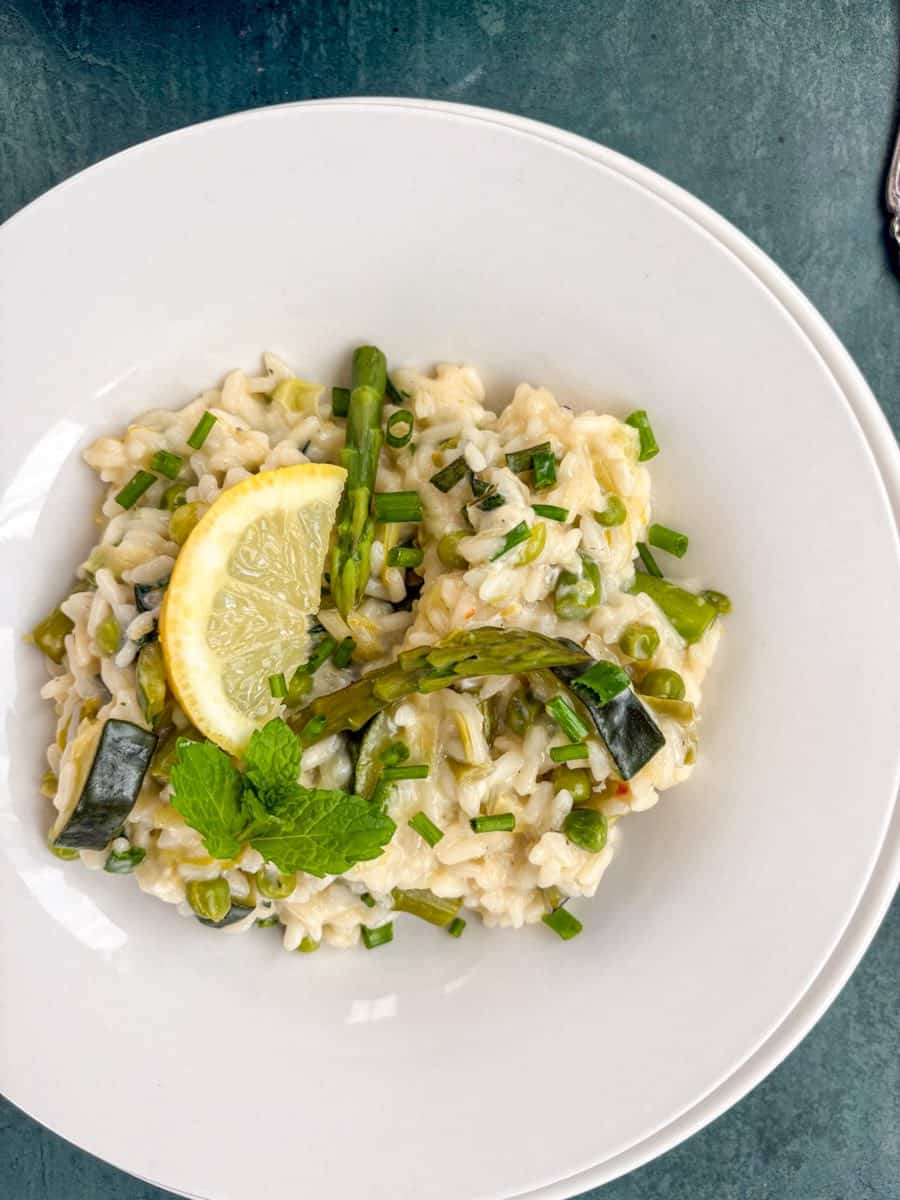
This creamy Spring Vegetable Risotto is Spring in a bowl. Leeks, asparagus, broad beans or peas and courgettes are the star ingredients, finished simply with a generous handful of grated Parmesan, herby cream cheese and a squeeze of fresh lemon juice.
There’s something about a dish packed with Spring vegetables that feels like a bit of a reset after all the heavier, comfort food of Winter.
It’s still cosy and comforting (it is risotto, after all!), but lighter, fresher, and full of those bright green vegetables that start appearing everywhere this time of year.
It’s time to say goodbye to earthy Winter flavours and embrace all of the lighter tastes of Spring – I’ve been foraging for wild garlic to make wild garlic butter and wild garlic pesto, making dishes like this roasted pepper orzo salad to have with cold roast chicken. I’m also less in the mood for heavier desserts and opting instead for lighter options, such as lemon posset.
This Spring vegetable risotto is packed with simple Spring fare – tender asparagus, sweet peas, broad beans and leeks.
For extra creaminess (and decadence!), stir in a spoonful of herby garlic cream cheese at the end, then the grated zest of a lemon and some of the juice as well. This cuts through the richness beautifully and stops the risotto from becoming a bit too heavy
I know risotto has a reputation for being a little high-maintenance, but honestly, it’s far more relaxed to make than people believe. A bit of stirring, a glass of wine nearby (for you, not just the pan), and you’re rewarded with something that feels a bit special without being difficult or time- consuming.
I’ve always enjoyed making risotto. It’s not really something you can walk away from – you have to keep stirring it, but I find the process quite relaxing, especially after a long, hard day.
why you’ll love this recipe
- It’s made in one pan – no juggling several pots and pans! Well, that’s almost a lie – you do need to keep your stock warm in a pan on the hob – but that’s hardly extra work
- Easy to make – no chef-level skills required
- Perfect for a simple dinner that feels like a bit of a treat
helpful tips
A few tips for making the best risotto….
- Keep your stock warm – it helps the rice cook evenly. I keep it in a small pan on the hob on a low-medium heat (just don’t let it boil).
- Stir regularly, but not obsessively – you don’t need to stand and stir it constantly – you can give your arm a short rest now and again!
- The rice should be tender with a slight bite, but not mushy.
- The moment the rice reaches that stage, remove the pan from the heat and finish with the Parmesan, cream cheese and lemon zest and juice.
- Don’t forget to taste the risotto and add salt and pepper – since Parmesan is salty, you won’t need much salt, but you will need to add a little.
- If you need this risotto to be vegetarian-friendly, you’ll obviously need to use vegetarian Parmesan cheese.
- Not keen on dill or parsley? You can just swap them for another herb – fresh mint or basil adds a different but lovely flavour.
- If you aren’t keen on broad beans but love courgettes, feel free to omit and add more of the vegetables you like.
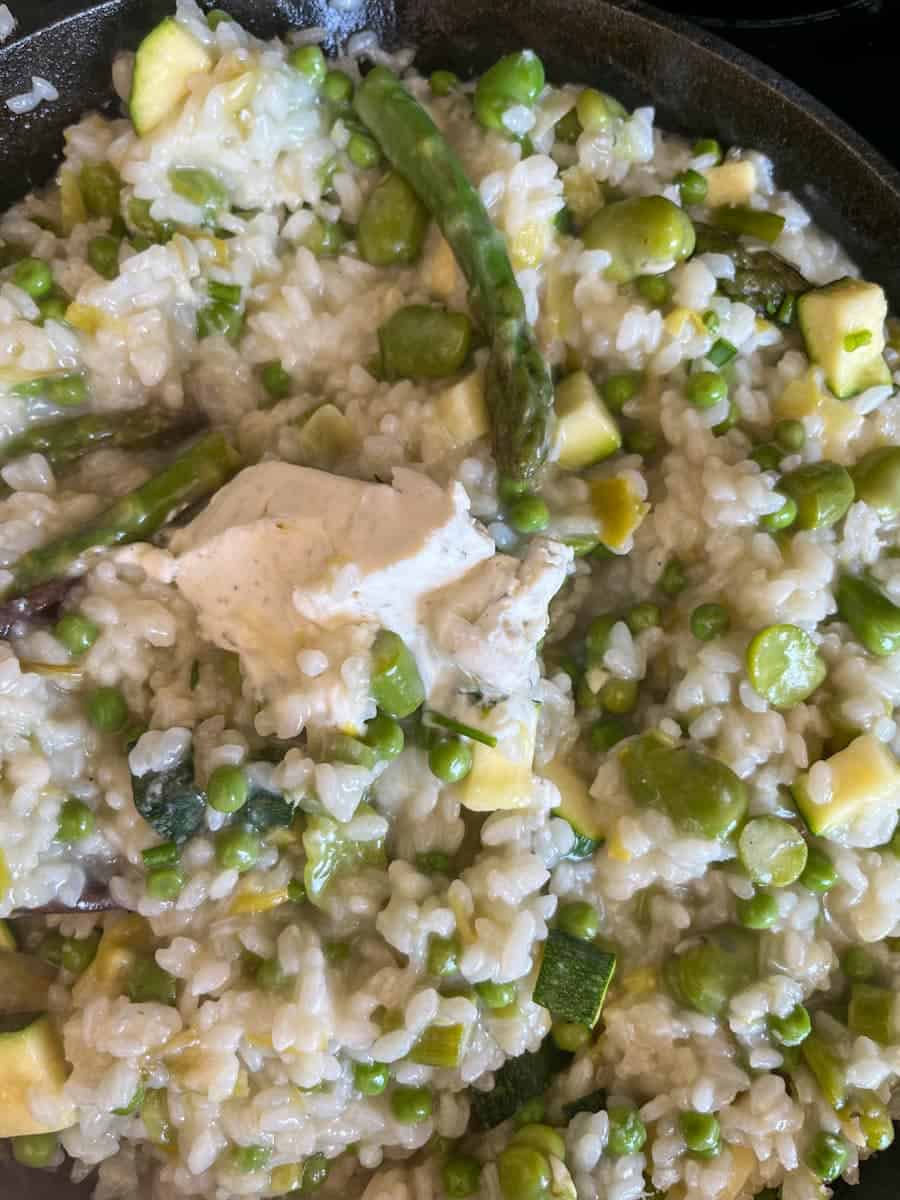
- I melt a little herb cream cheese into the risotto just before serving – it’s not essential, but adds richness to the risotto. You could also use mascarpone or butter if you don’t have cream cheese.
a short note about the vegetables
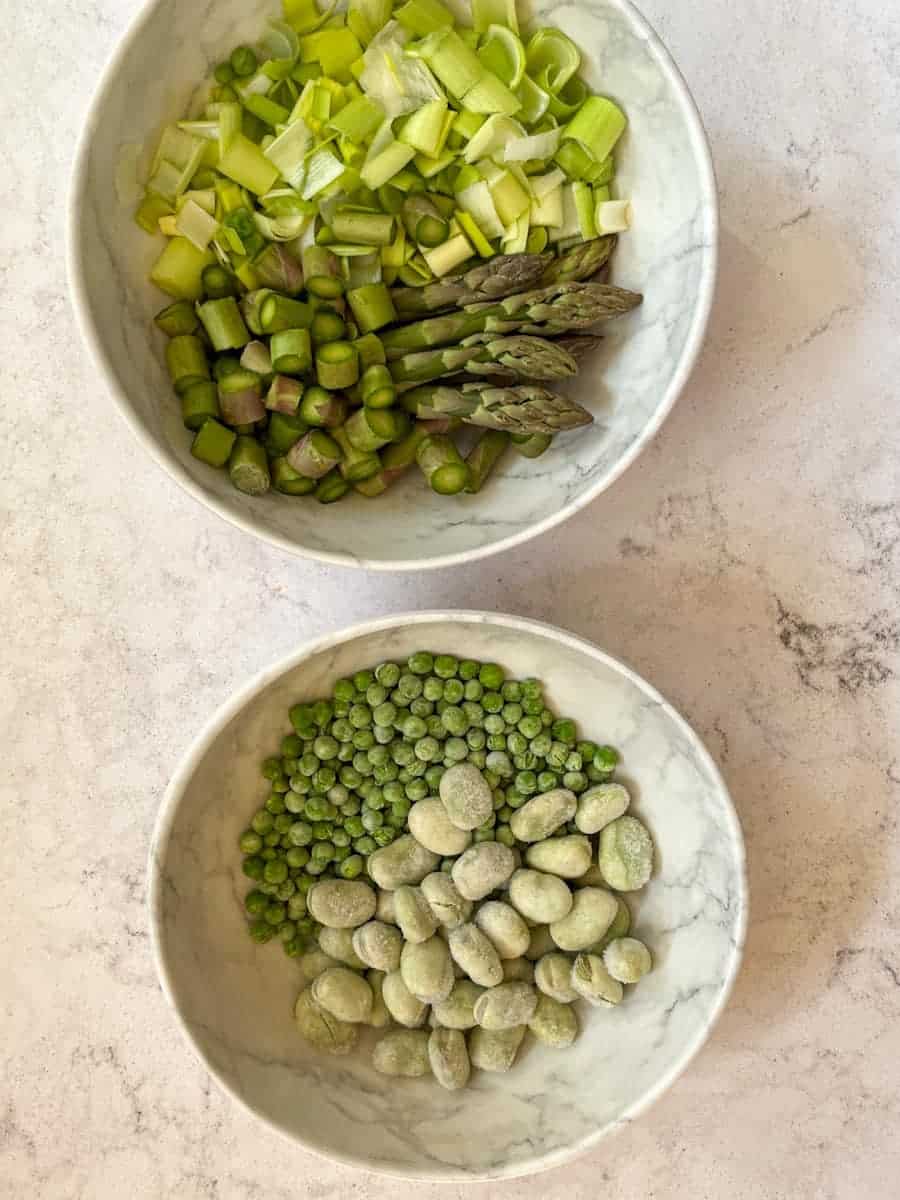
I must confess to using frozen peas and broad beans as fresh ones weren’t available, and anyway, there’s absolutely nothing wrong with using frozen vegetables! But if you can get your hands on fresh beans and peas, then, of course, please use them instead.
what’s the best pan for making risotto?
A wide, shallow, heavy-based pan, rather than a deep saucepan, is ideal for risotto. It gives the rice more surface area to cook evenly and helps the stock absorb properly.
A large frying pan, saute pan or shallow casserole dish all work well – as long as it has a good solid base. I almost always use stainless steel, but enamel would work well too. The main thing is to give the rice a bit of space to cook evenly – so don’t choose anything too small.
serving suggestions
Serve the risotto just as it is, with an extra grating of Parmesan and, if you like, an extra squeeze of lemon juice. If you want to make it a little more substantial, it pairs very well with salmon, trout (fresh trout, cooked with nothing more than salt, pepper and lemon slices, is my absolute favourite), or grilled chicken. It’s also lovely with:
- A green salad
- crusty bread or baguette
- garlic bread
- a glass of white wine on the side
storing risotto and leftovers
Leftover risotto should be cooled as soon as possible and packed into food containers. Once it has fully cooled, store it in the fridge for up to three days.
You might need to add a little stock when reheating the risotto to loosen the texture, but don’t add too much or the risotto could become stodgy. Please be aware that re-heated risotto is never quite as nice as freshly made (in my opinion, anyway!)
Spring Vegetable Risotto (Easy, Creamy & Full of Fresh Flavour)

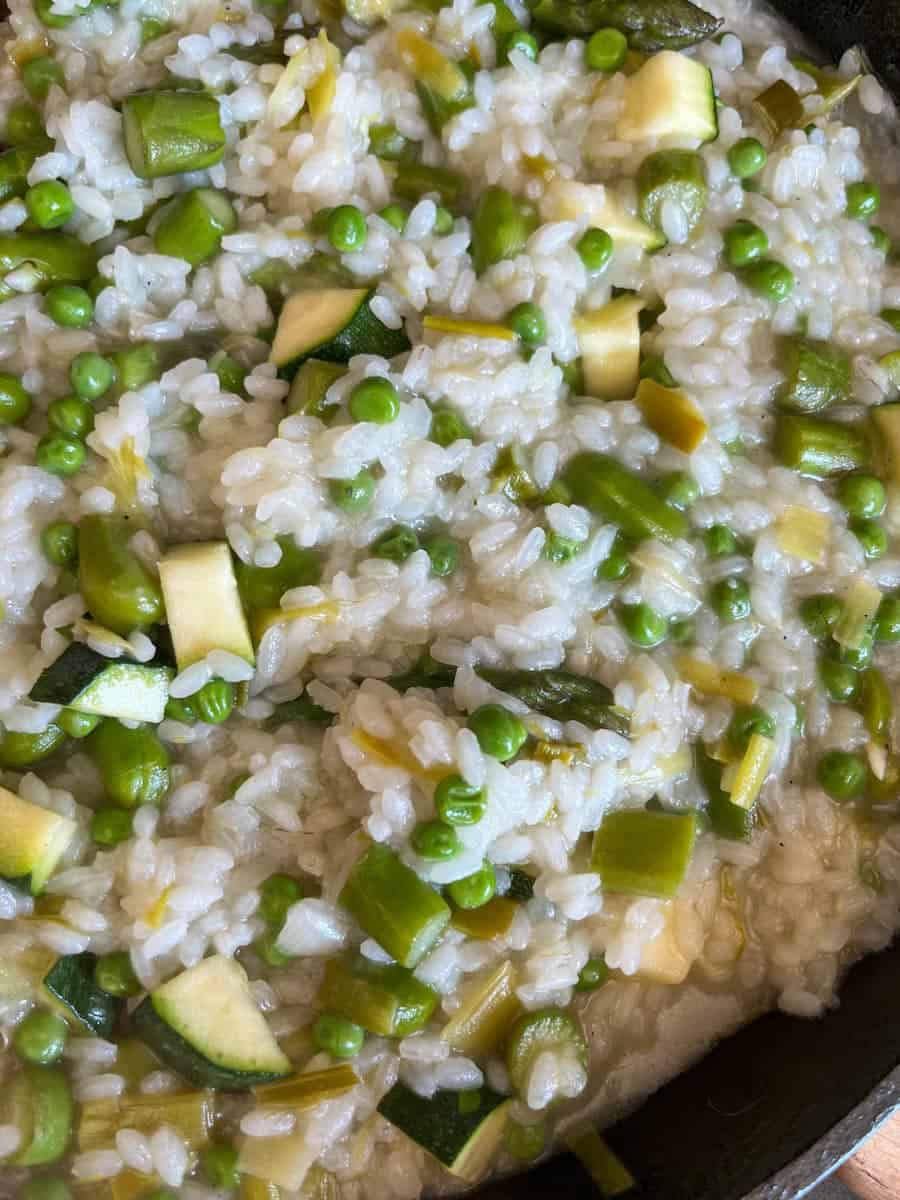
Make the most of all the delicious produce Spring has to offer by making this easy Spring Vegetable Risotto. It's light, creamy and packed full of healthy vegetables. Adding the vegetables at different times might sound like a bit of a pain, but doing so ensures they don't turn mushy or too soft.
Ingredients
- 1 tablespoon olive oil
- 1 tablespoon butter
- one leek, finely sliced
- 2 garlic cloves, crushed
- 300g risotto rice
- 80ml dry white wine (optional)
- 2 pints hot vegetable stock
- 100g frozen broad beans, thawed and shelled
- 125g asparagus, sliced
- 75g courgette (zucchini), thinly sliced
- 150g frozen peas or petis pois, thawed
- zest and juice of one small lemon
- 50g freshly grated vegetarian parmesan
- sea salt and freshly ground black pepper
- 75g herb cream cheese (optional)
- 2 tablespoons freshly chopped herbs (I used parsley and dill), optional
Instructions
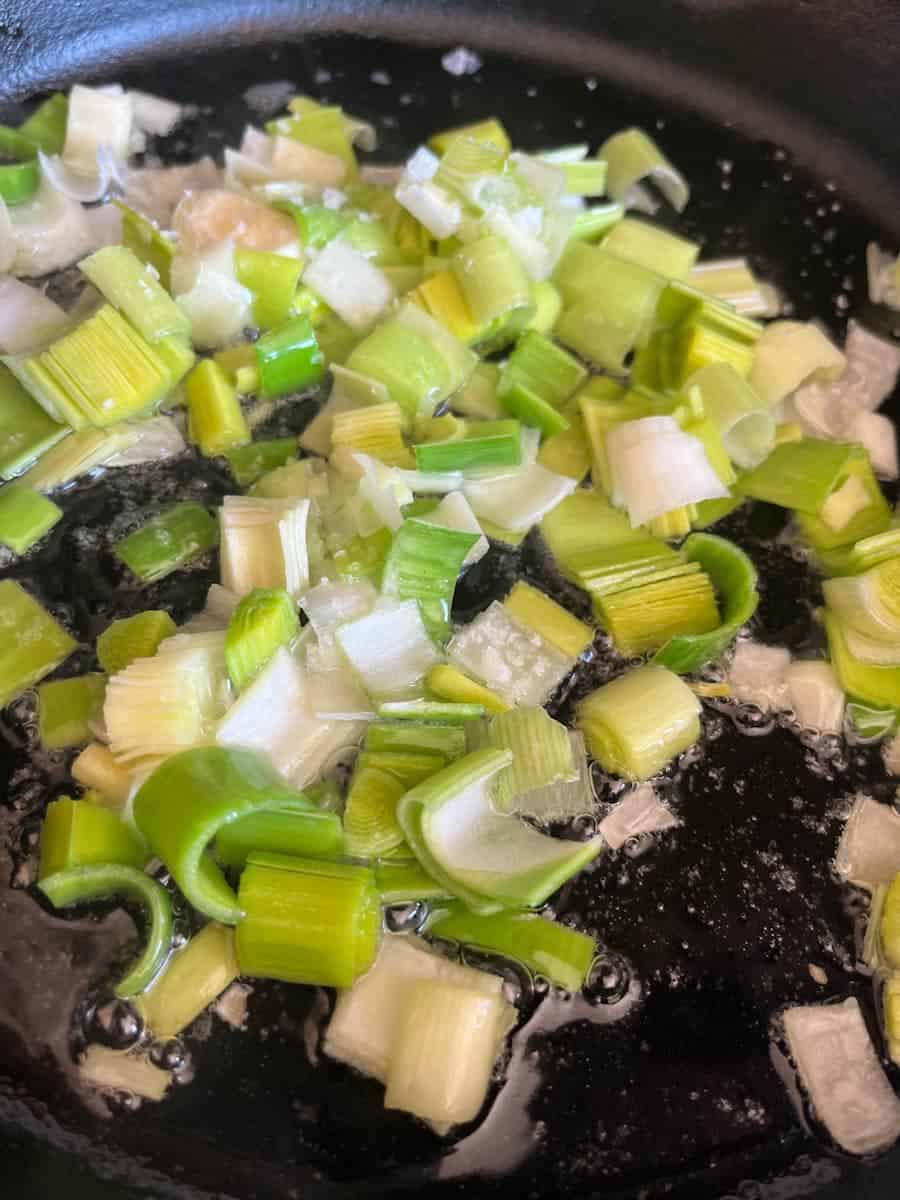
- Pour the hot vegetable stock in a pan, place on the hob and let it simmer very, very gently. Heat the oil and butter over a low heat in a large heavy-bottomed saucepan. I always use a wide stainless steel pan that isn't too deep, as it gives the rice more surface area to cook evenly. Add the sliced leek and saute for a few minutes until soft and translucent. Add the garlic and cook for a further one or two minutes. Don't let it turn brown, or it will taste bitter and you will have to start again, which would make me sad for you!
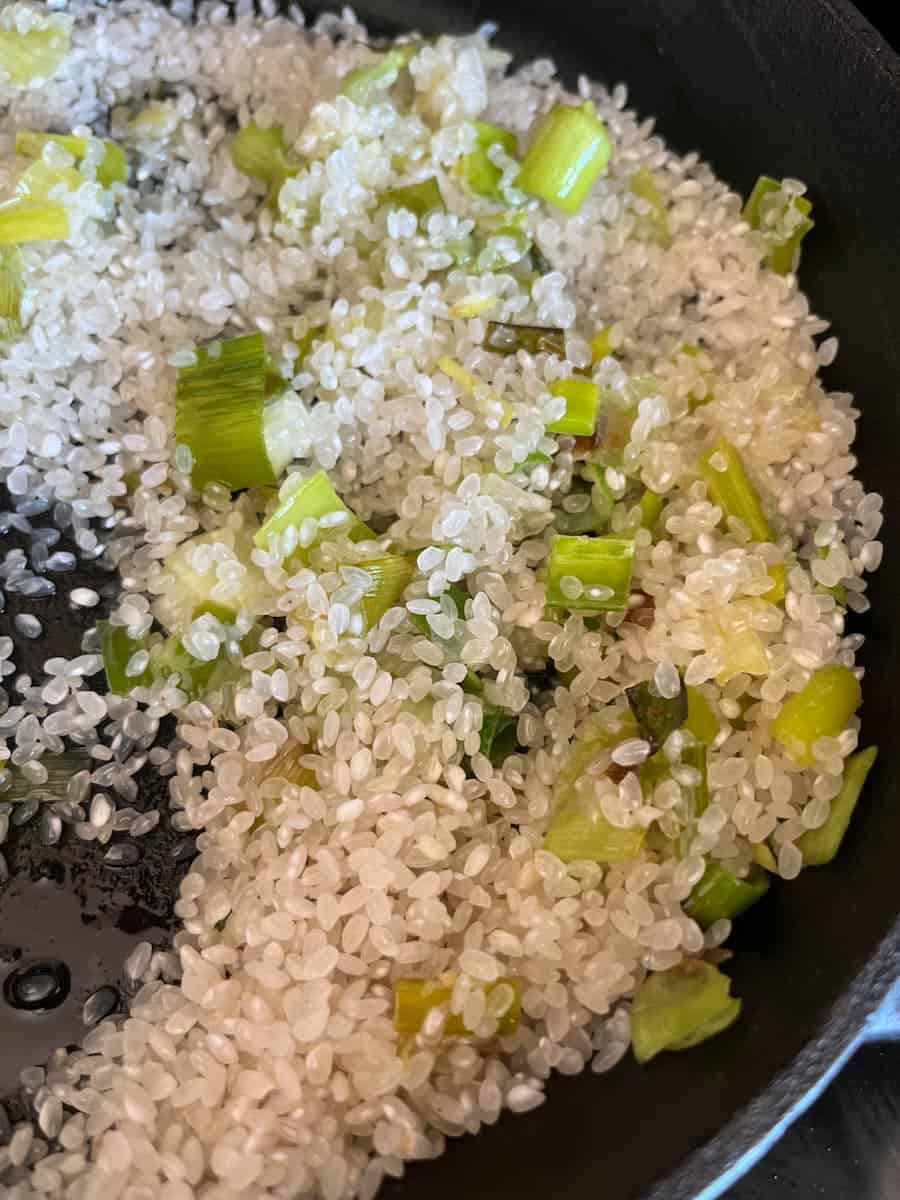
- Stir in the risotto rice, making sure all the grains are covered in oil/butter. Add the wine, if using, and let it reduce down for a couple of minutes. Add a ladleful of the hot stock and stir often with a wooden spoon until the liquid has been absorbed. Keep adding a ladleful of stock as soon as the liquid has absorbed - if you let the pan get too dry, the rice will begin to stick so you must keep a close eye on it.
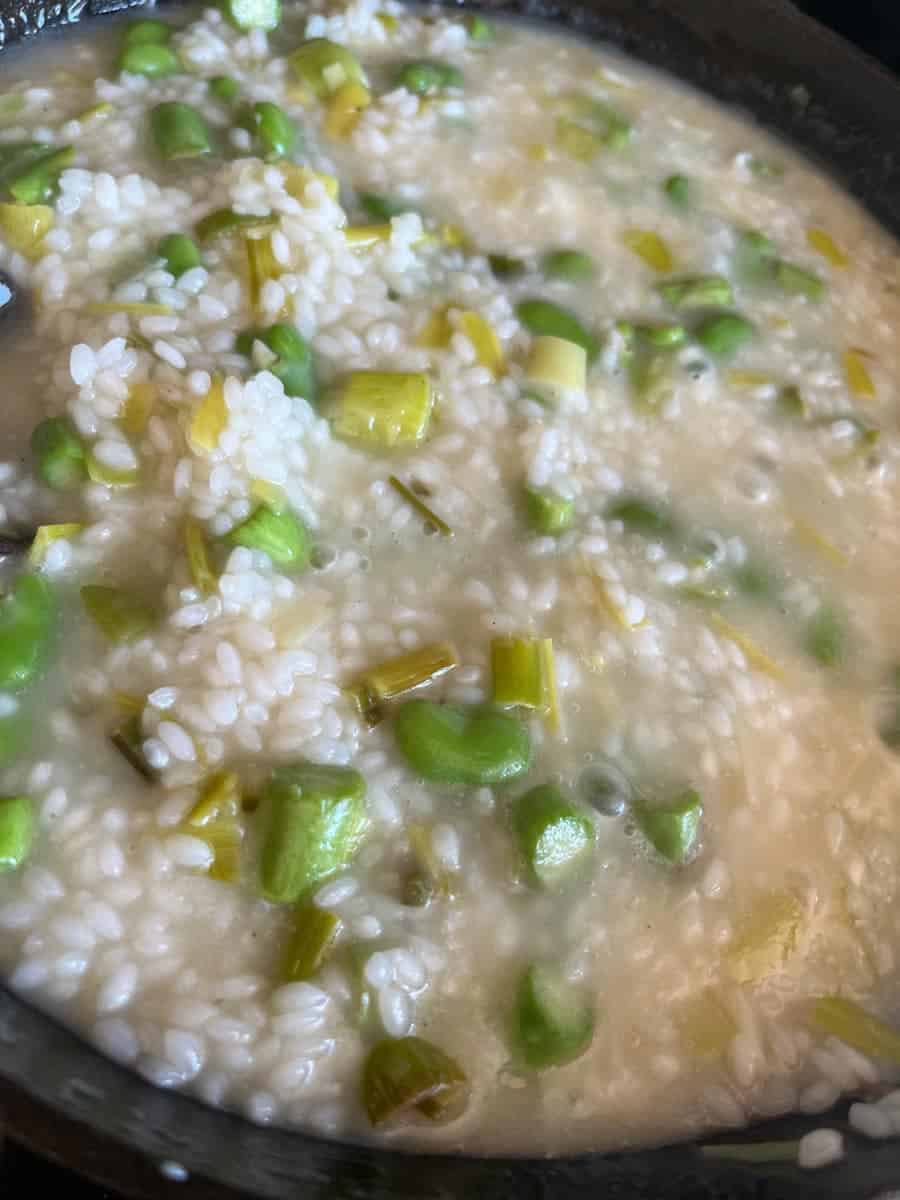
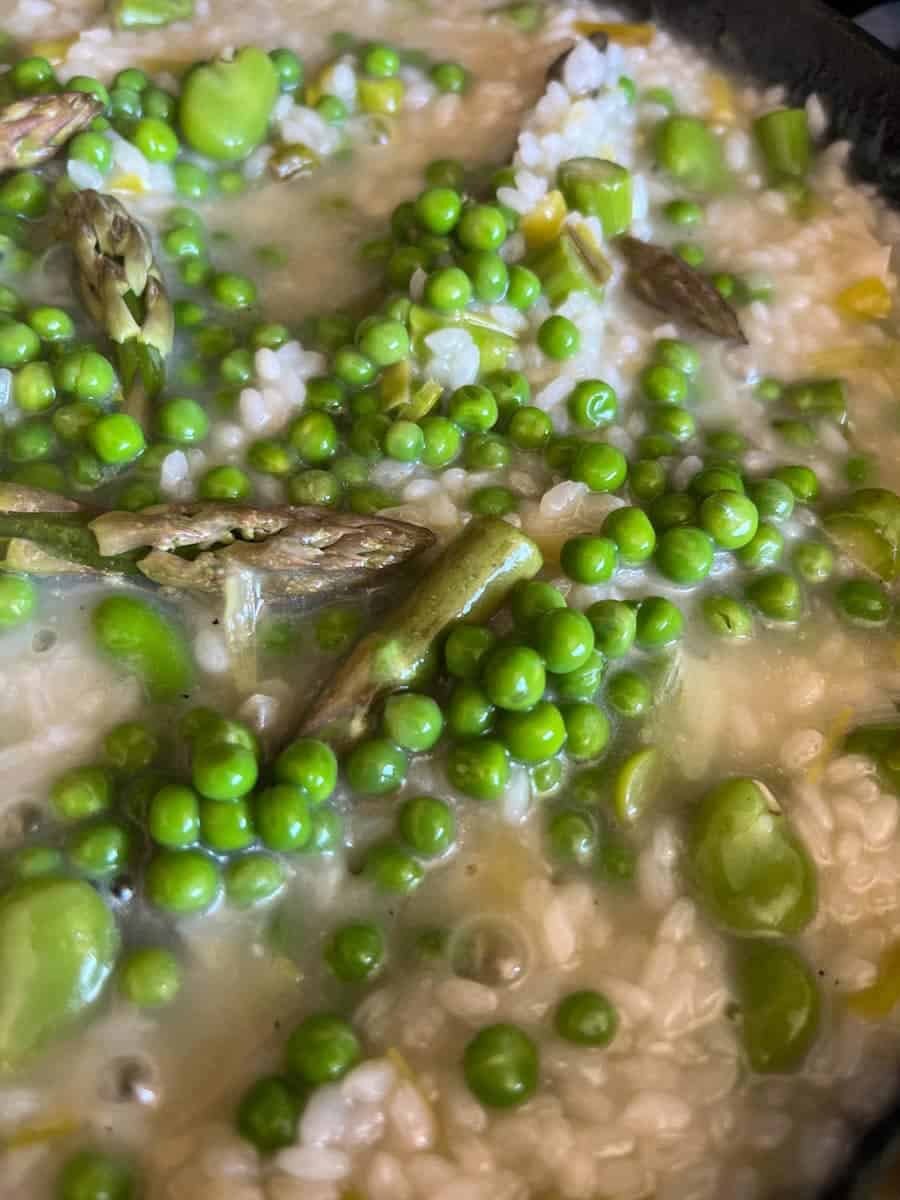
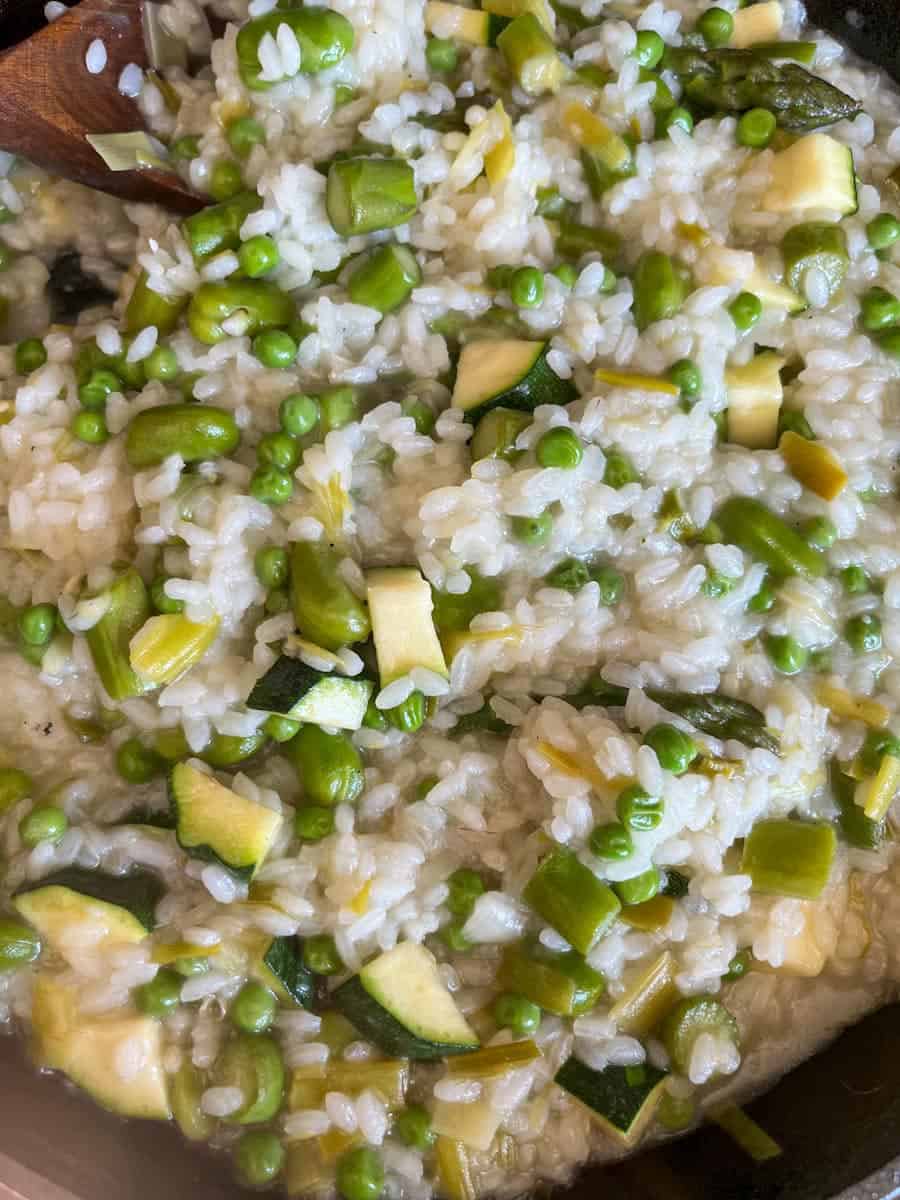
- Add the broad beans and the thicker pieces of the asparagus (not the spears, they take less time) after about 10 minutes, then add the asparagus, courgettes and peas after 15 minutes. Continue adding the stock until the rice is tender but still a little firm in the middle. Timings depend on your hob (how hot it is, whether you're using electric/gas etc), but it doesn't usually take longer than 25 minutes.
- Remove the pan from the heat and stir in the lemon zest, juice, half the parmesan cheese and the cream cheese if using. Place a lid on the pan and allow the risotto to rest for a minute. Season to taste with salt and pepper, stir in the herbs if using and serve with the remaining parmesan.
Nutrition Information:
Yield:
4Serving Size:
1Amount Per Serving: Calories: 359Total Fat: 14gSaturated Fat: 6gTrans Fat: 0gUnsaturated Fat: 6gCholesterol: 26mgSodium: 1109mgCarbohydrates: 46gFiber: 6gSugar: 5gProtein: 13g
Calories and nutritional information are provided by a third party application and should be viewed as indicative figures only.